
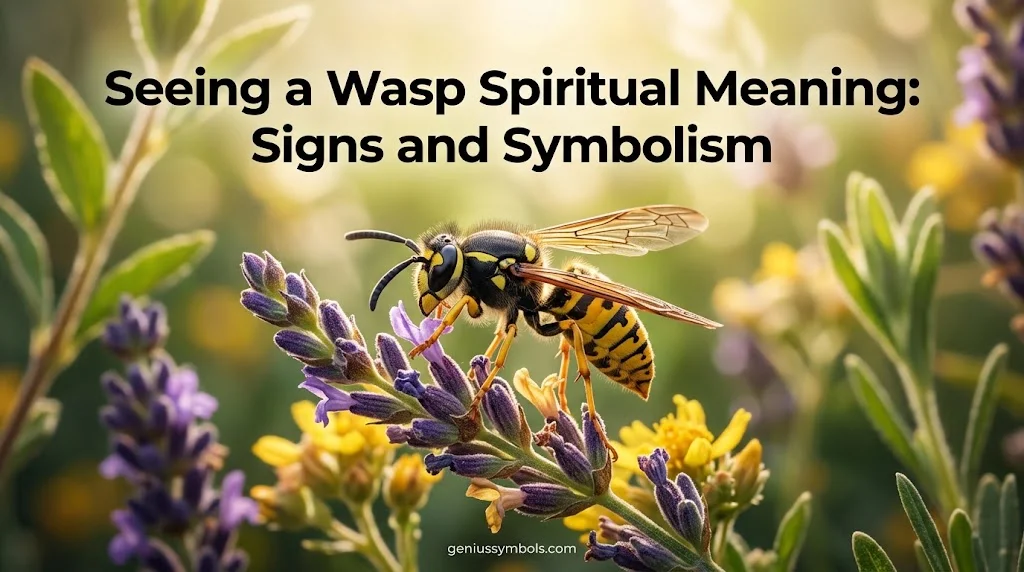
Seeing a wasp can feel like more than an ordinary encounter, especially when it appears unexpectedly or repeatedly. For many people, the seeing a wasp spiritual meaning connects with personal boundaries, courage, patience, and the need to pay attention to life. Its sudden appearance may prompt reflection about a decision, relationship, or change that feels important.
In the United States, wasps often bring mixed feelings. Some people admire their persistence and role in nature, while others associate them with painful stings and danger. These everyday reactions shape the insect’s symbolic meaning, making it a powerful reminder of both strength and caution.
However, spiritual interpretations aren’t universal rules. A wasp appearing near your window doesn’t automatically predict good fortune, conflict, or an important life event. Instead, its symbolism can offer a thoughtful way to examine your emotions, surroundings, and current experiences.
Quick Answer
The spiritual meaning of seeing a wasp in the United States is commonly interpreted as a reminder to protect your boundaries, act with courage, stay focused, and approach change carefully. In broader spiritual interpretations, wasps may represent independence, determination, transformation, and awareness. These meanings are personal interpretations rather than proven supernatural messages.
TL;DR
- Wasps can symbolize courage, independence, persistence, and personal boundaries.
- Seeing one indoors may prompt reflection about comfort, safety, and private space.
- Repeated encounters can encourage awareness without necessarily predicting a future event.
- Ancient cultures associated stinging insects with different ideas about nature, power, and order.
- Modern American symbolism often balances admiration for wasps with caution about their stings.
- A wasp encounter can inspire reflection, but its natural behavior matters too.
1. What Does Seeing a Wasp Mean Spiritually?
A wasp’s spiritual meaning often comes from its appearance, behavior, and reputation. Its quick movements, organized activity, and ability to defend itself make it a natural symbol of alertness and determination. For American readers, these traits can suggest the importance of protecting personal space while pursuing meaningful goals.
Core Spiritual Interpretations
Several common interpretations help explain why people find wasp encounters meaningful:
- Boundaries: A wasp may remind you to protect your time, energy, and personal space.
- Courage: Its defensive nature can represent standing firm when something important is threatened.
- Focus: Its persistent movements may encourage attention toward a neglected goal.
- Independence: A wasp can symbolize confidence in making decisions without constant approval.
- Change: An unexpected encounter may prompt reflection during a new stage of life.
These interpretations are symbolic, not established facts about the supernatural. Their usefulness depends on what the encounter brings to mind and how well that meaning fits your circumstances.
Why the Encounter Feels Significant
Unexpected experiences often capture attention more strongly than familiar events. A wasp flying close to your face, for example, can create an immediate emotional response.
Because the encounter feels unusual, you may connect it with something already happening in your life. That connection can encourage self-reflection without requiring you to believe the insect was sent as a message.
2. Historical Origins of Wasp Symbolism
Wasps have existed for millions of years, long before humans developed written religious traditions. Their relationship with people has involved fear, fascination, practical observation, and attempts to explain the natural world. Understanding this history helps separate documented cultural beliefs from modern spiritual interpretations.
Ancient and Pre-Christian Associations
In the ancient world, people often interpreted animals and insects through their surroundings, behavior, and perceived powers. Stinging insects could inspire ideas about defense, pain, danger, and the hidden forces of nature.
However, there is no single ancient meaning shared by every civilization for seeing a wasp. Evidence for specific beliefs varies, and modern claims about universal wasp messages shouldn’t be mistaken for established historical traditions.
Ancient Egyptian culture provides a useful example of how insects could acquire powerful symbolic roles. The scarab beetle, not the wasp, became closely associated with renewal, the sun, and rebirth. This distinction matters because popular spiritual writing sometimes blends the symbolism of different insects.
Wasps in Folklore and Traditional Life
Across history, people observed how wasps built nests, defended colonies, and responded to threats. These visible behaviors naturally encouraged comparisons with human communities and social relationships.
- Nest building could suggest careful work and preparation.
- Defensive behavior could represent protection and vigilance.
- Seasonal appearances could draw attention to changing weather and cycles of nature.
- Painful stings could inspire cautionary stories about pride, carelessness, or crossing boundaries.
These are reasonable symbolic connections, but they shouldn’t all be attributed to one specific ancient religion or culture. Some are modern interpretations of behaviors people have observed for generations.
From Traditional Beliefs to Modern Spirituality
Today, many people explore animal symbolism through personal reflection, spiritual writing, and online communities. As a result, older observations about insects often appear alongside newer ideas about energy, intuition, and personal growth.
The modern spiritual meaning of a wasp therefore reflects a mixture of natural observation, cultural memory, and individual belief. Its history is less about one unchanging message and more about how people give meaning to encounters with nature.
Read More: Spiritual Meaning of Seeing Coffin in a Dream: 7 Key Messages
3. Wasp Symbolism in the United States
In the United States, wasps have a complicated place in everyday life. They can represent persistence and self-defense, yet their painful stings make many people wary. This contrast gives the wasp a distinctive symbolic role in American culture.
Independence and Self-Reliance
American culture often celebrates independence, personal responsibility, and the courage to stand up for yourself. A wasp can reflect these values through its alertness and defensive behavior.
However, this is a modern symbolic comparison, not a fixed national tradition. People may interpret the insect differently depending on their experiences, beliefs, and surroundings.
Work, Preparation, and Community
Many wasps build intricate nests and perform useful roles within their colonies. These behaviors can remind American readers of preparation, cooperation, and steady effort.
Wasps also help control other insect populations, while some species pollinate plants. The Smithsonian Institution notes that many members of the broader bee, ant, and wasp group support pollination or help limit insect pests.
Common American Interpretations
| Context | Possible Meaning in the USA | Common Association | Important Note |
| Wasp outdoors | Awareness and persistence | Nature, resilience | The insect may simply be foraging |
| Wasp near your home | Protection and boundaries | Safety, privacy | Check for ordinary nesting activity |
| Wasp building a nest | Planning and productivity | Effort, preparation | Nest-building is natural behavior |
| Wasp defending itself | Courage and self-protection | Assertiveness | Avoid provoking the insect |
| Wasp appearing unexpectedly | Change or reflection | Surprise, curiosity | Personal meaning isn’t a prediction |
These interpretations reflect modern symbolic possibilities rather than beliefs held by every American. Still, they show why a small insect can prompt questions about identity, responsibility, and personal growth.
4. Cross-Cultural and Spiritual Meanings of Wasps
Wasp symbolism differs across religious traditions, communities, and personal belief systems. Some interpretations emphasize danger and defense, while others focus on cooperation, persistence, or the lessons people draw from nature. Respecting these differences means avoiding claims that one spiritual interpretation applies everywhere.
Christian Perspectives
The Bible contains references to hornets, particularly in passages describing the displacement of enemies from the land. For example, Exodus 23:28 mentions hornets in the context of God’s promise to drive out opposing peoples.
However, the passage doesn’t establish a universal spiritual meaning for seeing an ordinary wasp in your home or garden. Christians may use the encounter as an opportunity for prayer or reflection, but interpretations differ among individuals and denominations.
Indigenous Traditions and Cultural Differences
Indigenous peoples across North America have distinct histories, languages, spiritual practices, and relationships with animals. There isn’t one universal Indigenous interpretation of wasps.
Claims that every Native American tradition treats wasps as spirit messengers or symbols of healing should be approached cautiously. Specific beliefs should be connected to a documented community and its own teachings.
Likewise, other societies have developed different stories about insects, nature, and protection. A wasp’s symbolic meaning depends on the cultural setting rather than a single worldwide spiritual code.
Modern Spiritual Interpretations
Contemporary spiritual communities often interpret wasps through themes such as personal power, determination, and change. Some people also use animal encounters as prompts for meditation, journaling, or self-examination.
These practices can be personally meaningful without proving that a supernatural message occurred. You can explore a symbol’s emotional significance while remaining open to ordinary explanations.
5. Spiritual Meaning of Seeing a Wasp in Your House
A wasp inside the home can feel particularly significant because a house represents privacy, comfort, and security. In modern spiritual interpretations, this encounter often relates to personal boundaries, domestic harmony, and awareness. Its meaning, however, depends on your own perspective and the circumstances.
A Reminder to Protect Your Personal Space
Your home is where you expect to feel comfortable and safe. Therefore, an unexpected wasp can serve as a symbolic reminder to consider which people, responsibilities, or situations affect your peace.
You might reflect on questions such as:
- Have you agreed to too many responsibilities lately?
- Are you allowing someone to ignore your personal boundaries?
- Do you need more quiet time or privacy?
- Is there a difficult conversation you’ve been avoiding?
These questions don’t mean that a wasp predicts conflict. Instead, they turn a surprising experience into an opportunity for honest reflection.
A Symbol of Change at Home
A wasp appearing indoors may also inspire thoughts about changing routines, relationships, or living arrangements. Because homes represent stability, an unexpected visitor can draw attention to what feels unsettled.
Still, there’s no reliable spiritual rule linking indoor wasps with family conflict or bad luck. Wasps can enter through open doors, windows, and other gaps while searching for food or shelter.
If you see several wasps indoors, check for possible entry points or nesting activity. Avoid disturbing a nest, especially in enclosed spaces.
6. Spiritual Meaning of Seeing Wasps Repeatedly
Repeated encounters can feel especially meaningful because people naturally notice patterns. Spiritually, some interpret recurring wasp sightings as reminders to stay focused, establish boundaries, or pay attention to an unresolved concern. However, repetition alone doesn’t prove that an outside force is sending a message.
What Repeated Sightings May Represent
If wasps keep appearing during a particular period, consider what the experience brings to mind. The most useful interpretation may involve a situation you’re already thinking about.
- Recurring challenges: Reflect on whether the same problem keeps returning.
- Personal boundaries: Consider whether you need to communicate your limits more clearly.
- Persistent goals: Ask whether a meaningful project deserves renewed attention.
- Greater awareness: Notice your surroundings and respond thoughtfully instead of automatically.
These are reflection prompts, not predictions. Their value comes from whether they help you understand your own circumstances.
Why Wasps May Keep Appearing Naturally
There may also be a simple environmental explanation. Wasps often visit gardens, outdoor dining areas, flowering plants, and places where sugary foods are available.
Repeated sightings near your house may indicate a nearby nest or a reliable food source. In that situation, practical observation matters more than trying to decode every appearance.
You can respect a personal spiritual interpretation while still responding sensibly to what the insect is doing.
7. Does a Wasp’s Color or Behavior Change Its Meaning?
The black-and-yellow pattern of many familiar wasps makes them visually striking. Their narrow waists, transparent wings, and rapid movements can also make them seem unusually alert. Although these features influence symbolic interpretations, color and behavior don’t have universally accepted spiritual meanings.
Black and Yellow Wasps
Black is often associated with mystery, protection, and the unknown in modern Western symbolism. Yellow can suggest energy, attention, optimism, or caution.
Together, these colors may inspire interpretations involving alertness, confidence, and careful decision-making. However, these associations come from broader color symbolism, not from a universal spiritual tradition about wasps.
A Wasp Flying Around You
A wasp that circles nearby may inspire thoughts about persistence or something demanding your attention. Nevertheless, it could simply be investigating a scent, food source, or suitable place to land.
Rather than assuming the insect is targeting you spiritually, consider your surroundings first. If it approaches, remain calm and avoid swatting at it.
A Wasp Landing on You
An unexpected landing can be startling, especially if you fear stings. Symbolically, you might interpret the moment as a reminder to pause, become aware, or respond carefully under pressure.
Yet the insect’s presence doesn’t establish a prediction about your relationships, career, or future. Its natural behavior remains the most direct explanation.
8. Emotional and Psychological Meaning of a Wasp Encounter
A wasp can trigger several emotions at once. Some people feel fear, while others feel curiosity or fascination. These reactions influence the personal meaning they assign to the encounter.
Fear, Alertness, and Self-Protection
Because wasps can sting, people often react quickly when one approaches. This response reflects an understandable desire to avoid pain.
Symbolically, the experience can prompt reflection on situations that make you feel threatened, pressured, or defensive. However, feeling afraid of a wasp doesn’t necessarily indicate hidden emotional conflict.
Confidence and Personal Power
Other people admire the wasp’s ability to defend itself despite its small size. For them, the insect can represent confidence, resilience, and the courage to take up space.
This interpretation may resonate when you’re learning to say no, express an unpopular opinion, or pursue a difficult goal. The useful lesson is assertiveness without unnecessary aggression.
How to Reflect on Your Experience
If the encounter stayed in your mind, consider three simple questions:
- What was happening in my life when I noticed the wasp?
- Which emotion did I experience first?
- Does any symbolic interpretation help me understand that emotion?
Your answers can reveal why the moment felt important. They don’t need to establish a supernatural explanation for it.
9. Wasps in Tattoos, Art, and Modern Popular Culture
Today, wasps appear in tattoo designs, illustrations, fashion, and online discussions about animal symbolism. Their sharp shape and bold coloring make them visually distinctive. At the same time, their reputation gives artists several possible themes to explore.
Wasp Tattoos
A wasp tattoo can express a personal message, although its meaning depends on the wearer and design.
Common interpretations include:
- Strength: Showing the ability to withstand challenges.
- Protection: Representing a commitment to defend personal boundaries.
- Determination: Marking persistence toward a meaningful goal.
- Independence: Expressing confidence and self-reliance.
- Transformation: Reflecting a period of personal change.
These meanings aren’t universal. A tattoo might instead honor a memorable encounter, represent an interest in insects, or simply appeal to the wearer aesthetically.
Social Media and Online Spirituality
Online spiritual communities often discuss wasps as symbols of personal power, change, and awareness. Short posts can make these interpretations easy to share, especially when an encounter happens at an emotionally significant moment.
However, social media can also make individual beliefs sound like ancient universal truths. A popular interpretation isn’t necessarily historically documented or shared by every spiritual tradition.
Home Decor and Creative Design
Wasp imagery may appear in nature-inspired artwork, garden illustrations, and decorative designs. Some people appreciate its bold colors and geometric appearance, while others prefer images associated with gentler insects.
In creative settings, a wasp can communicate energy, precision, or resilience. Its meaning comes from the overall design and the viewer’s associations.
10. Misunderstandings, Negative Associations, and Controversies
Wasps are often treated as symbols of aggression because they can sting. Yet this view leaves out their ecological value and the fact that many species generally avoid people when undisturbed. Understanding the difference between natural behavior and human interpretation prevents misleading conclusions.
Are Wasps Always Bad Omens?
No. There is no universal tradition establishing that a wasp encounter means misfortune, betrayal, or danger is coming.
Some modern spiritual interpretations frame wasps as warnings. Others view them as symbols of persistence, independence, or transformation. Neither approach establishes what will happen in the future.
A wasp in your home should first be understood as a real insect in a physical environment, not automatic evidence of negative energy.
Confusing Bees, Hornets, and Wasps
People sometimes use insect names interchangeably, but bees, wasps, and hornets aren’t identical. Hornets are a type of wasp, while bees belong to a related but distinct group.
Their symbolic associations may overlap, especially around protection and industriousness. Nevertheless, meanings commonly associated with bees, such as honey, nourishment, or certain rebirth traditions, shouldn’t automatically be assigned to wasps.
When Symbolism Becomes Misleading
Problems arise when someone presents a personal interpretation as a guaranteed spiritual fact. Claims that a wasp predicts death, betrayal, financial loss, or a specific future event can create unnecessary fear.
A balanced approach allows room for spiritual curiosity without encouraging anxiety. You can find personal meaning in nature without treating every encounter as a warning.
11. How Wasp Symbolism Has Changed Over Time
Wasp symbolism has never followed one simple, universal path. Instead, its meanings emerge from changing relationships between people, nature, cultural stories, and personal beliefs. Modern interpretations often emphasize inner strength and boundaries, while everyday reactions still include caution and fear.
From Natural Observation to Personal Symbolism
Historically, people encountered wasps through farming, gardening, food preparation, and outdoor life. Their nests, defensive behavior, and stings made them noticeable parts of the environment.
Over time, these observations offered useful comparisons with human qualities. A wasp could inspire thoughts about persistence, collective work, danger, or defense without belonging to a formal religious system.
The Influence of Modern Spiritual Writing
Contemporary animal symbolism frequently connects encounters with personal growth and emotional awareness. Online articles and social platforms have expanded these interpretations, allowing people to compare experiences and share their own beliefs.
However, this expansion also blurs the difference between documented folklore and recently developed spiritual ideas. A modern interpretation can still be meaningful, but its age and cultural origins should be described honestly.
What the Wasp Represents Today
In present-day American culture, the wasp can represent opposing ideas at once. It can seem threatening because of its sting and admirable because of its persistence.
This tension is part of the symbol’s appeal. Rather than offering one fixed message, the wasp invites people to consider when strength is helpful, when caution is necessary, and how to protect themselves without creating unnecessary conflict.
FAQs:
What does seeing a wasp mean spiritually?
Seeing a wasp is commonly interpreted in modern spiritual writing as a symbol of boundaries, determination, protection, and change. The meaning depends on your beliefs and circumstances rather than a universal spiritual rule.
Is seeing a wasp a good sign or a bad sign?
A wasp encounter isn’t inherently good or bad. Some people associate it with courage and progress, while others see it as a reminder to remain cautious. Neither interpretation reliably predicts future events.
What does it mean when a wasp enters your house?
Symbolically, a wasp indoors may prompt reflection on privacy, personal boundaries, or changes in your home life. Practically, it may have entered through an open window or door while seeking food or shelter.
What does seeing a wasp repeatedly mean spiritually?
Repeated sightings may inspire you to examine a recurring challenge or goal. However, they don’t prove that the universe or a spiritual being is communicating with you. Consider environmental explanations as well.
What does a wasp symbolize in the Bible?
The Bible mentions hornets in passages including Exodus 23:28 and Deuteronomy 7:20. These references concern the biblical narrative of driving out opposing peoples, not a universal rule about encountering wasps in daily life.
Conclusion:
The seeing a wasp spiritual meaning can offer a thoughtful way to explore courage, personal boundaries, persistence, and change. In the United States, these interpretations often reflect familiar values such as independence and self-protection. Across cultures, however, wasp symbolism varies, and no single meaning applies to everyone.
If a wasp encounter feels significant, consider what you were thinking about and how you responded. You can use that moment to reflect on your goals, relationships, or need for greater awareness without assuming it predicts your future.

1 thought on “Seeing a Wasp Spiritual Meaning: Signs and Symbolism”