
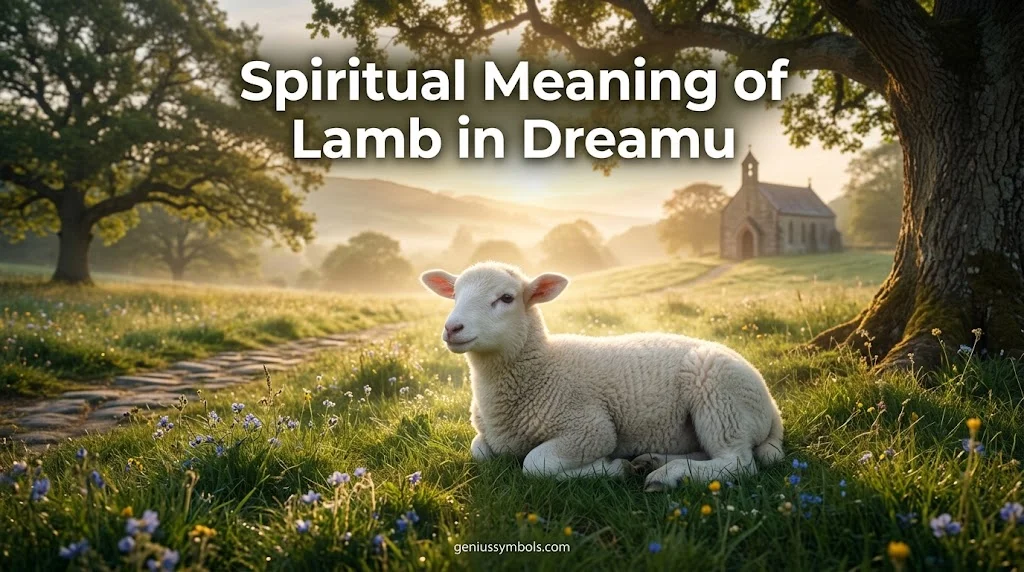
The Spiritual Meaning of Lamb in Dream explores how a lamb, a small animal, may reflect tenderness, care, innocence, sacrifice, and gentleness. In a dream, these qualities can appear through dream symbols and dream imagery, especially when you rely on others for safety or feel worried about responsibility in a rough world. The lamb may represent a softer part of you, while the setting, actions, and small details help explain the message.
A lamb in a meadow, breathing fresh air, staying still, or softly bleating can feel peaceful, while one hiding in a dark corner and unable to find its mother may suggest fear or emotional need. The meaning often shifts according to the dream scene and your personal feelings.Your background can also shape the symbol. Religious imagery, religious traditions, and personal beliefs may influence what a lamb means, especially if you grew up with certain stories or teachings.
It could represent a person you feel responsible for, your purity, or a pure part of your mind that has become compliant because of pressure. Sometimes replaying images from a book, farm visit, or video watched before bed explains the dream without requiring a spiritual message. Your feelings and present life provide important clues.
Quick Answer
The Spiritual Meaning of Lamb in Dream often points to innocence, gentleness, protection, spiritual renewal, or sacrifice. In American Christian contexts, it may also remind people of Jesus as the “Lamb of God.”
More broadly, the dream can reflect vulnerability, compassion, a need for guidance, or a desire for peace. Your personal emotions and current life situation matter just as much as traditional symbolism.
TL;DR
- A lamb commonly represents innocence, gentleness, purity, and vulnerability.
- Christian symbolism connects the lamb with sacrifice, redemption, and Jesus.
- A peaceful lamb may reflect safety, trust, or emotional calm.
- A lost lamb can symbolize loneliness, uncertainty, or a search for guidance.
- A wounded lamb may represent vulnerability, grief, or a need for protection.
- Dream symbolism is personal and shouldn’t be treated as a fixed prediction.
What Does a Lamb Symbolize in a Dream?
A lamb is usually associated with qualities that feel gentle and defenseless. Because of this, its appearance in a dream can draw attention to kindness, vulnerability, or something precious that needs care.
For an American reader, these associations may come from religious teachings, family traditions, movies, books, or holiday imagery. Even someone who isn’t religious may recognize the lamb as a symbol of innocence.
Innocence and Purity
A young lamb naturally suggests innocence. Its soft appearance and dependence on others make it an easy symbol for something untouched or newly developing.
Therefore, a lamb dream may appear during a fresh start. It might reflect a new relationship, personal goal, friendship, or change in identity.
Gentleness and Vulnerability
Lambs aren’t usually viewed as powerful animals. Their symbolism instead comes from softness and vulnerability.
Consequently, the dream may encourage you to notice something delicate in your life. That could be another person, a relationship, your confidence, or your own emotional needs.
Biblical Meaning of a Lamb in Dreams
The lamb has a deep place in biblical symbolism. In the Hebrew Bible, lambs appear in sacrifices and Passover traditions. Later Christian writings connect the lamb directly with Jesus.
For many Americans raised in Christian households, these associations can influence dream imagery even when the dreamer hasn’t consciously thought about them recently.
The Lamb of God
John the Baptist’s description of Jesus as the “Lamb of God” became one of Christianity’s best-known lamb images. The symbolism connects the lamb with sacrifice, redemption, and spiritual hope.
A dream involving a lamb may therefore remind a Christian dreamer of forgiveness or renewed faith. However, that interpretation depends on the person’s beliefs and circumstances.
The Good Shepherd
The relationship between a shepherd and sheep adds another layer. A shepherd protects, guides, and searches for animals that wander away.
Because of this imagery, a lamb dream can represent a desire for guidance. It may also reflect feelings of being cared for during a difficult season.
Ancient Roots of Lamb Symbolism
Lamb and sheep symbolism existed long before modern American culture. Sheep were important sources of food, wool, wealth, and livelihood across the ancient Near East and Mediterranean world.
Archaeological evidence also shows that sheep and related animals had ritual importance in ancient societies. Their meaning varied widely, so it would be inaccurate to claim that every ancient culture viewed the lamb in exactly the same way.
Early Agricultural Societies
Sheep became important as humans developed farming communities. Their practical value naturally influenced their cultural importance.
Over time, animals connected with food, fertility, wealth, sacrifice, and seasonal life could take on religious meaning. The lamb’s young age also made it especially suited to ideas of innocence and new life.
Jewish Tradition
Lambs became strongly associated with sacrifice in ancient Israelite religious practice. Passover added another important layer because a lamb formed part of the traditional Passover meal.
These traditions later influenced Christian symbolism. As a result, the lamb developed a powerful connection with sacrifice, deliverance, and spiritual renewal.
What Does a White Lamb Mean in a Dream?
A white lamb usually strengthens associations with purity, peace, innocence, and spiritual clarity. White has also carried strong symbolic meaning in American religious art and popular culture.
However, color alone shouldn’t determine the interpretation. The lamb’s behavior and your emotional reaction are equally important.
Peaceful White Lamb
A calm white lamb may suggest emotional peace or a longing for simplicity. It can appear in dreams when someone wants distance from conflict or pressure.
It may also represent a fresh beginning. In that case, the dream could reflect your hope that a difficult period is finally changing.
Frightened White Lamb
A frightened lamb changes the emotional tone. Instead of peace, it may represent vulnerability or fear.
You might be worried about someone you care about. Alternatively, the lamb could represent a part of yourself that feels uncertain or unprotected.
Read More: Spiritual Meaning of Dust in a Dream: What It Means
What Does a Lamb Mean Spiritually in Christianity?
Christian interpretations often connect lamb imagery with innocence, sacrifice, redemption, humility, and Christ. These meanings developed through biblical passages and centuries of Christian art.
For American Christians, the symbolism may feel especially familiar around Easter. Churches, children’s books, decorations, paintings, and religious lessons have helped keep the image alive.
Sacrifice and Redemption
The lamb’s connection with sacrifice can make a dream feel spiritually serious. It may encourage reflection on forgiveness, responsibility, or the cost of helping someone.
Still, a dream shouldn’t automatically be treated as a divine command. Religious symbolism can provide a framework for reflection without proving that a supernatural message occurred.
Faith and Renewal
The lamb can also represent hope after hardship. This interpretation fits Christian themes of redemption and spiritual renewal.
Therefore, someone going through a major transition may experience a lamb dream as emotionally comforting. The dream can become a personal reminder of faith, compassion, or a new beginning.
What Does a Lamb Mean in American Culture?
In the United States, lamb symbolism often blends religious tradition with ideas about childhood, nature, farming, and peaceful rural life.
This makes the symbol broader than religion alone. A person might associate a lamb with Easter, a farm, a children’s story, or a peaceful field.
Common American Associations
| Context | Meaning in the USA | Common Associations | Notes |
| Christian imagery | Sacrifice and redemption | Jesus, Easter, church art | Strong biblical influence |
| Children’s imagery | Innocence and sweetness | Storybooks, toys, nursery art | Usually gentle and nonreligious |
| Rural imagery | Simplicity and care | Farms, fields, shepherds | Connected with pastoral life |
| Dream symbolism | Vulnerability and renewal | Peace, protection, change | Highly personal interpretation |
| Easter traditions | New life and faith | Spring, lambs, celebrations | Religious and cultural meanings overlap |
Popular Culture
American media often presents lambs as gentle, harmless, or adorable. That repeated imagery can influence dreams.
For example, someone who grew up seeing lambs in children’s books may associate one with safety rather than sacrifice. Personal memories can therefore reshape traditional symbolism.
What Does a Lamb Mean Emotionally and Psychologically?
Dreams can reflect emotions, memories, concerns, and expectations. A lamb may symbolize an emotional quality rather than a literal spiritual message.
Because lambs are vulnerable, the dream may highlight a need to protect something important. It can also represent your own softer side.
When You Feel Protective
If you were protecting a lamb in the dream, consider what currently needs protection in your waking life.
You might be defending a relationship, caring for family, guarding a personal dream, or trying to preserve your peace.
When You Feel Vulnerable
If you were the one who felt helpless, the lamb may represent your own emotional state. This interpretation becomes more likely when the dream feels frightening or lonely.
Instead of asking only, “What does the lamb mean?” ask, “What did I feel around the lamb?” That question often provides more useful insight.
What Does It Mean to Dream About a Baby Lamb?
A baby lamb can emphasize newness, dependence, innocence, and potential. It may symbolize something in your life that has only recently begun.
That could involve a relationship, project, personal habit, or spiritual interest. The dream may simply reflect your awareness that something new requires patience.
Caring for a Baby Lamb
Feeding, holding, or protecting a baby lamb often suggests nurturing energy. You may be giving time and attention to someone or something important.
However, it can also raise a question about boundaries. Caring for others is meaningful, but constant self-sacrifice can become exhausting.
Watching a Baby Lamb Grow
A growing lamb can represent development. It may reflect your awareness that a small beginning could eventually become something significant.
This makes the image especially relevant during periods of learning, personal change, or rebuilding.
What Does a Lost Lamb Mean in a Dream?
A lost lamb often creates a stronger emotional theme than a peaceful lamb. It may symbolize disconnection, uncertainty, loneliness, or the search for direction.
Biblical shepherd imagery can make this interpretation particularly meaningful for Christian dreamers.
Searching for the Lamb
If you were looking for a lost lamb, you may be trying to recover something important. That could be confidence, peace, purpose, trust, or connection.
The dream may also reflect concern about another person. You might feel responsible for someone who seems uncertain or distant.
Being the Lost Lamb
If you felt that you were the lamb, the dream may point toward feeling unsupported. You may be searching for belonging or clearer direction.
This doesn’t necessarily mean something bad is coming. Instead, it can reveal a current emotional need.
What Does an Injured or Dead Lamb Mean?
An injured lamb can represent vulnerability, grief, guilt, or emotional pain. A dead lamb can feel even more intense, but it doesn’t automatically predict death or disaster.
Dreams frequently use dramatic images to express emotional change. Therefore, the important question is what the lamb’s condition meant to you.
Injured Lamb
An injured lamb may symbolize something precious that has been hurt. It could represent trust, innocence, a relationship, or your sense of safety.
If you tried to help it, the dream may emphasize healing and compassion. If you felt helpless, it may reflect frustration over something you can’t easily control.
Dead Lamb
A dead lamb may symbolize the end of innocence or the closing of a chapter. It can also represent grief over something that has changed.
In some spiritual contexts, sacrifice gives the lamb a deeper meaning. However, dream imagery should not be treated as a literal prediction of future events.
What Does It Mean to Feed, Hold, or Follow a Lamb?
What you do with the lamb can completely change the dream’s message. Actions often reveal your relationship with the symbol more clearly than appearance alone.
A lamb that you hold suggests a different emotional situation from one that runs away.
Feeding a Lamb
Feeding may symbolize care, generosity, or emotional investment. You could be giving energy to a person, goal, belief, or relationship.
It may also remind you to nurture yourself. Sometimes the person doing all the caring needs care, too.
Holding a Lamb
Holding a lamb often emphasizes closeness and protection. It can represent tenderness toward yourself or someone else.
For a spiritual dreamer, it might also echo imagery of divine care. For others, it may simply represent comfort and emotional connection.
Following a Lamb
Following a lamb can suggest curiosity, trust, or a search for direction. The dream may show that you’re exploring a gentler approach to life.
If the lamb leads you somewhere peaceful, the image may feel reassuring. If it leads you into danger, the dream could reflect uncertainty about whom or what to trust.
Cross-Cultural and Spiritual Meanings of Lambs
Lamb symbolism isn’t limited to Christianity. Sheep and related animals have appeared in religious and cultural traditions across the ancient Near East, Mediterranean, and other regions.
Still, meanings differ between traditions. A respectful interpretation should avoid treating all cultures as though they share one universal belief.
Judaism
In Jewish tradition, the lamb has important connections with Passover and ancient sacrificial practice. These associations helped establish themes of deliverance, remembrance, and religious observance.
Christianity
Christianity expanded lamb symbolism through the image of Jesus as the Lamb of God. The symbol can therefore represent sacrifice, redemption, innocence, and victory over suffering.
Islam
Sheep and lambs also have cultural and religious associations within Muslim communities, particularly around sacrifice and Eid al-Adha. However, Islamic dream interpretation has many schools and traditions, so there isn’t one universal meaning for every lamb dream.
Wider Ancient Traditions
Sheep held economic and ritual importance in several ancient societies. Their meanings could include fertility, wealth, sacred offerings, or social status.
This history explains why lamb symbolism can feel much older than any single modern religious interpretation.
Misunderstandings About Lamb Dreams
One common mistake is assuming every lamb dream has the same spiritual message. Dream symbolism doesn’t work like a dictionary where every image has one permanent definition.
Another mistake is treating a dream as a guaranteed prediction. Traditional symbolism can help with reflection, but it doesn’t establish what will happen next.
Symbolism Is Not Prediction
Dreams can feel meaningful without forecasting future events. A lamb may reflect current feelings, memories, beliefs, or concerns.
Therefore, avoid interpreting a frightening dream as proof that something terrible will happen.
Religious Meaning Is Personal
A Christian may immediately think of Jesus when seeing a lamb. Someone else may think of childhood, farming, spring, or a favorite story.
Neither response is automatically wrong. Personal associations help shape the meaning of dream imagery.
How Lamb Symbolism Has Changed Over Time
The lamb has moved through several layers of meaning. It began as a real animal central to agriculture and later became a powerful religious image.
Over centuries, artists, writers, families, and communities added new associations. Today, the lamb can represent everything from sacred sacrifice to childhood innocence.
From Livelihood to Symbol
Ancient communities depended on sheep for food, clothing, and economic value. Their practical importance helped create a strong cultural presence.
Religious rituals then added deeper meanings. Eventually, those meanings entered art, literature, holidays, and everyday language.
From Religion to Popular Culture
Modern Americans may recognize lamb imagery without thinking about its ancient origins. Children’s media often emphasizes sweetness, while Easter imagery blends religious and seasonal themes.
As a result, the same dream image can carry several layers at once. Your own background determines which layer feels strongest.
How to Interpret Your Own Lamb Dream
The best interpretation starts with the dream as a whole. Don’t isolate the lamb from its surroundings, your actions, or your emotions.
A simple reflection can help you identify the most relevant meaning.
Ask Yourself These Questions
- Was the lamb peaceful, frightened, injured, lost, or playful?
- Was the lamb alone or surrounded by other animals?
- Did you protect it, feed it, follow it, or avoid it?
- What color was the lamb?
- Where did the dream take place?
- How did you feel when you woke up?
- What major change or concern is happening in your life?
Your answers can reveal whether the lamb represents peace, vulnerability, responsibility, faith, or renewal.
Look at the Emotional Tone
A peaceful dream usually points toward different themes than a frightening one. Emotional tone provides important context.
For example, a calm lamb beside you may suggest comfort. A lamb running from danger may instead reflect anxiety about something vulnerable.
FAQs:
Is Seeing a Lamb in a Dream a Good Sign?
A lamb is often viewed positively because it represents innocence, gentleness, peace, and renewal. However, the dream’s overall mood matters more than the animal alone.
What Does a White Lamb Mean Spiritually?
A white lamb commonly symbolizes purity, innocence, peace, and spiritual clarity. In Christian contexts, it may also connect with biblical imagery of Christ as the Lamb of God.
What Does a Lamb Mean in a Biblical Dream?
Biblical lamb imagery can represent innocence, sacrifice, redemption, humility, and spiritual care. The specific meaning depends on the dream and the dreamer’s relationship with biblical symbolism.
What Does It Mean to Dream About a Lost Lamb?
A lost lamb may symbolize loneliness, uncertainty, disconnection, or a search for guidance. It can also reflect concern for someone who seems vulnerable.
What Does a Baby Lamb Represent in a Dream?
A baby lamb often represents new beginnings, innocence, growth, and something that needs nurturing. It may relate to a new relationship, project, belief, or stage of life.
Does Dreaming About a Lamb Mean Something Bad Will Happen?
No, a lamb dream shouldn’t be treated as a prediction of bad events. Even an injured or dead lamb can symbolize emotional change, grief, vulnerability, or the end of a life chapter.
Conclusion:
The Spiritual Meaning of Lamb in Dream often centers on innocence, gentleness, protection, sacrifice, and renewal. For many Americans, Christian symbolism adds another layer through the Lamb of God, Passover, Easter, and the image of the Good Shepherd.
However, the most useful interpretation comes from combining tradition with your own experience. Notice the lamb’s condition, your actions, the setting, and especially the emotions you felt. Sometimes the quietest dream image can invite the deepest reflection.

1 thought on “Spiritual Meaning of Lamb in Dream: Symbolism & Insight”